

KARABAKH, AZERBAIJAN
JULY 2026 | Return to rubble
There are two tragedies in life: one is attaining your dream; the other is not attaining it.
In the villages of Nagorno-Karabakh near Fuzuli, walls stand open to the weather while an eerie quiet envelopes them. Cemeteries are unhurriedly overgrown, unmarked white bomb disposal vans speckle the horizon, a lone a beekeeper chooses to live in the rubble rather than leave his hives. The war over Nagorno-Karabakh displaced communities on both sides - Azerbaijanis in the 1990s and more than 100,000 Armenians in 2023. Photographed in July 2026, this series follows the small, ordinary acts that continue among the ruins.
READ ESSAY
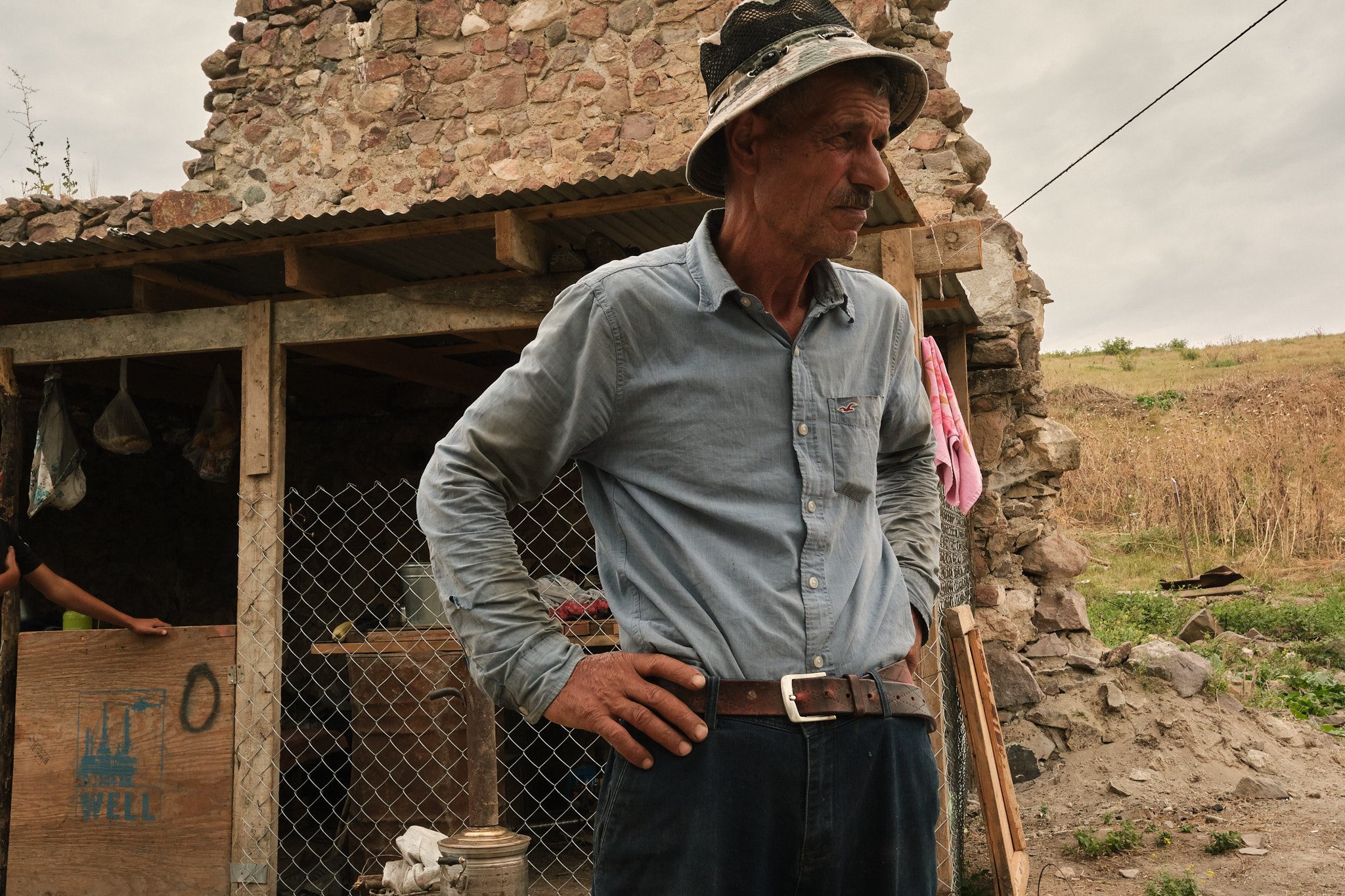
Muhammad, an Azerbaijani beekeeper, stands beside the damaged building in which he lives. Today, the only Muhammad and his son remain in their flattened village, he maintains the small cemetery and protects what is left from being swallowed by plants; Nagorno-Karabakh, in a village near Fuzuli, July 2026.

Muhammad's beehives. He sells the honey in 'Return', the newly renamed village just outside the militarised zone; Nagorno-Karabakh, in a village near Fuzuli, July 2026.
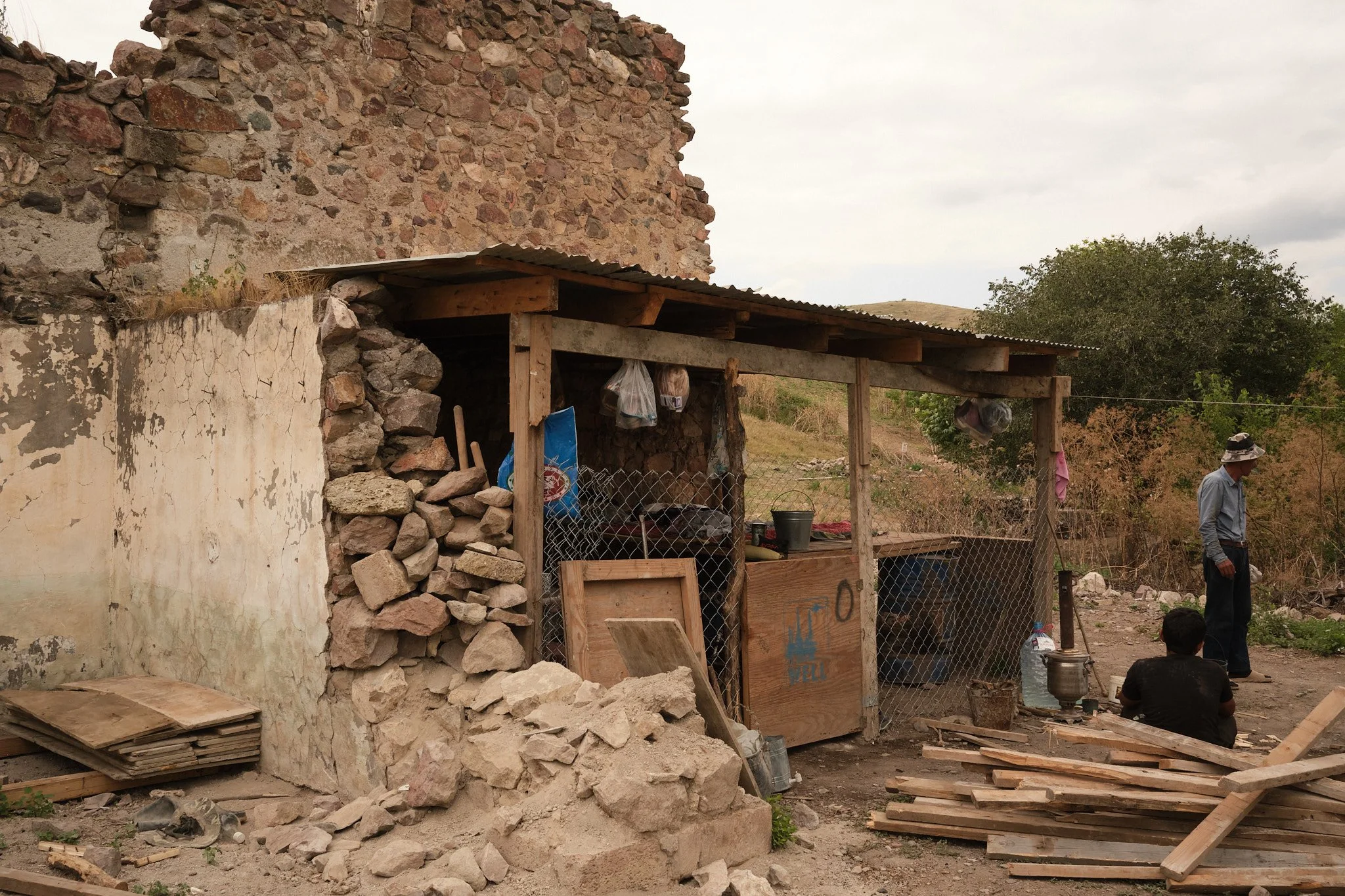
In what was previously the bathroom to a grander home in the village, a father and son now live inside, close enough to tend to their bees; Nagorno-Karabakh, in a village near Fuzuli, July 2026.
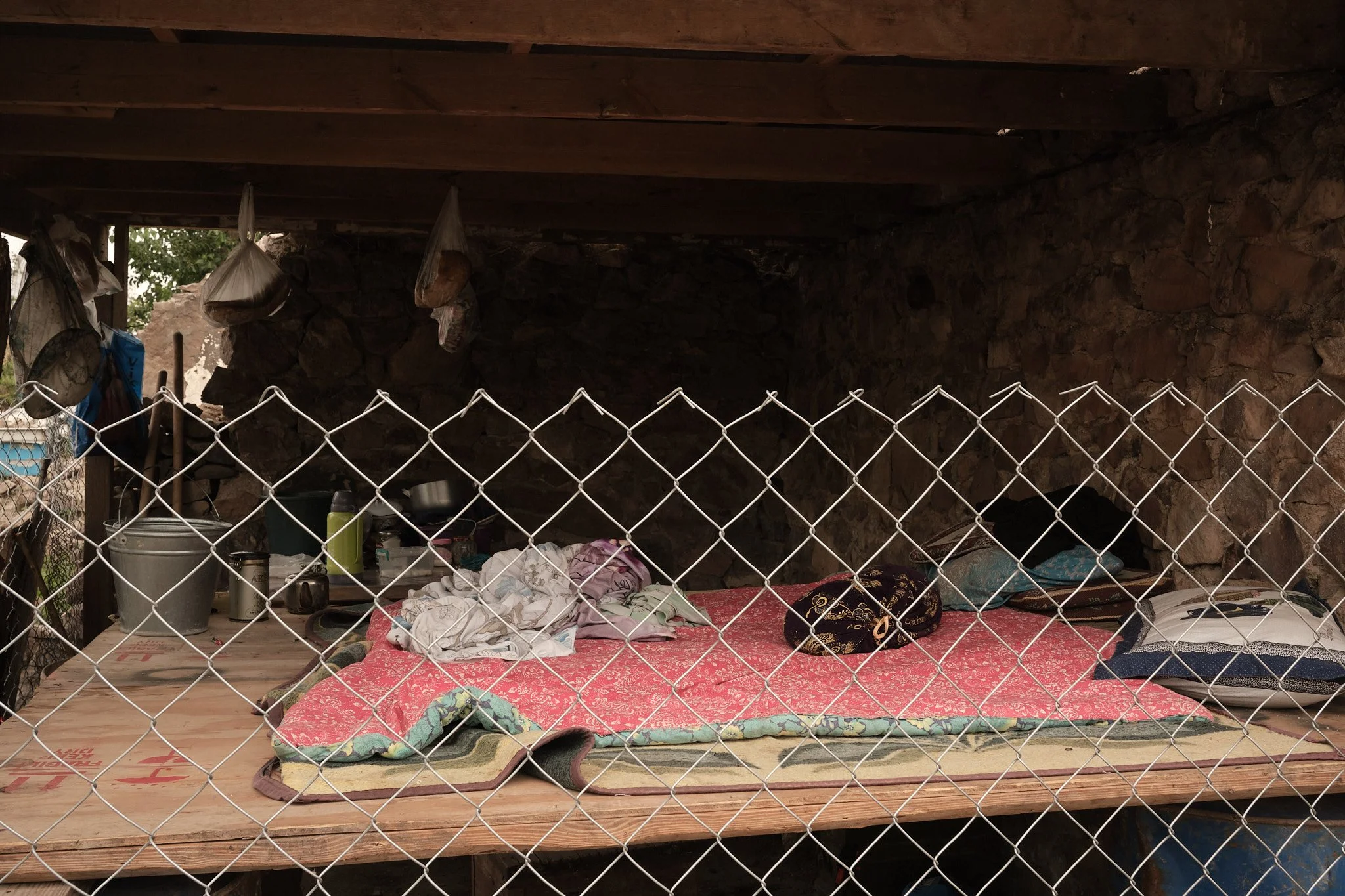
The sleeping arrangements within a destroyed house in Nagorno-Karabakh. Raising the platform off the ground is a precaution against venomous snakes. Food is hung in plastic bags to save it from insects; Nagorno-Karabakh, in a village near Fuzuli, July 2026.
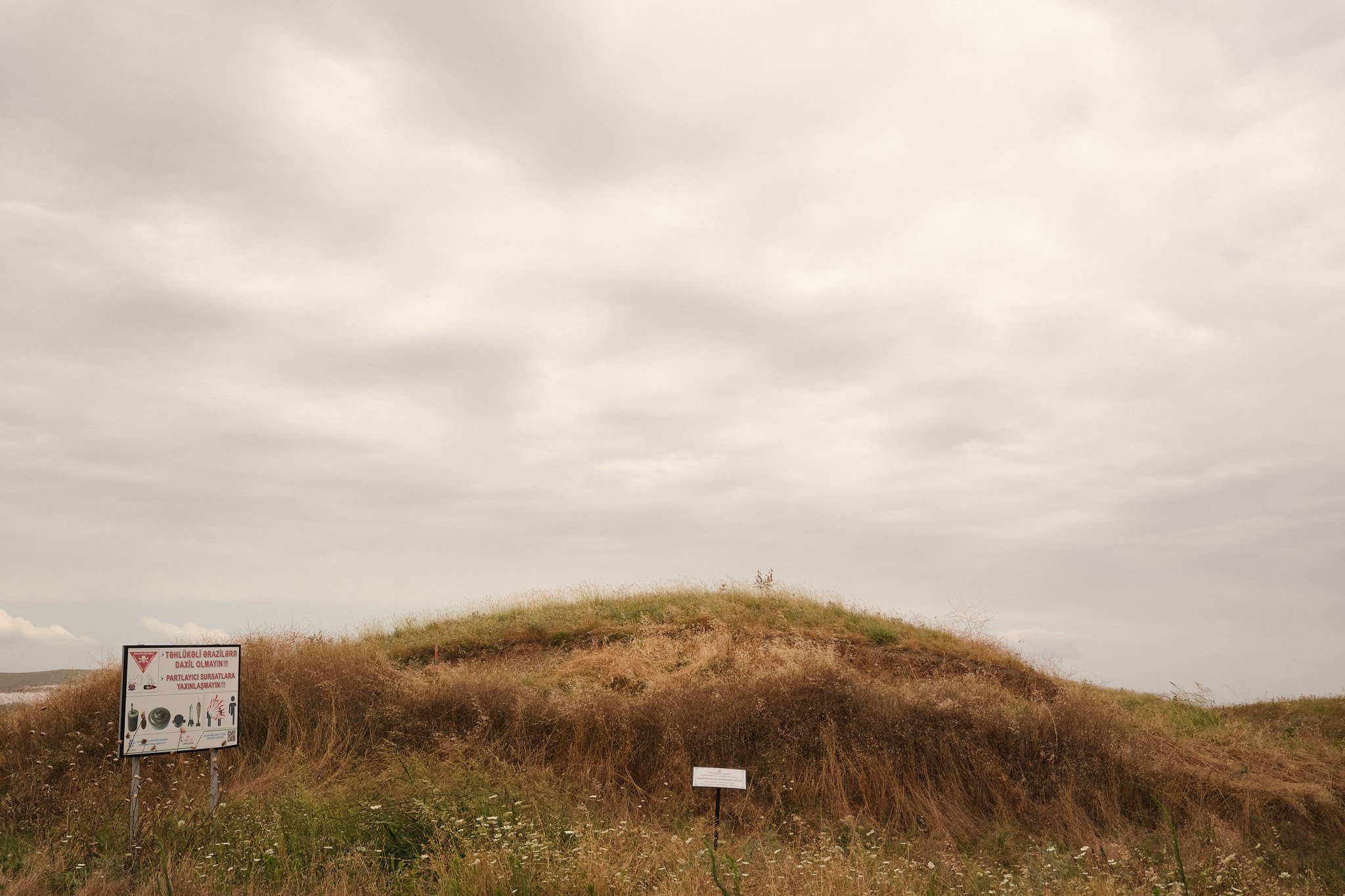
Signs warn of landmines and other unexploded weapons: “Do not enter dangerous areas. Do not approach explosive ordnance.” Aslan explained that these unassuming mounds were used as lookouts during the conflict; Nagorno-Karabakh, July 2026.
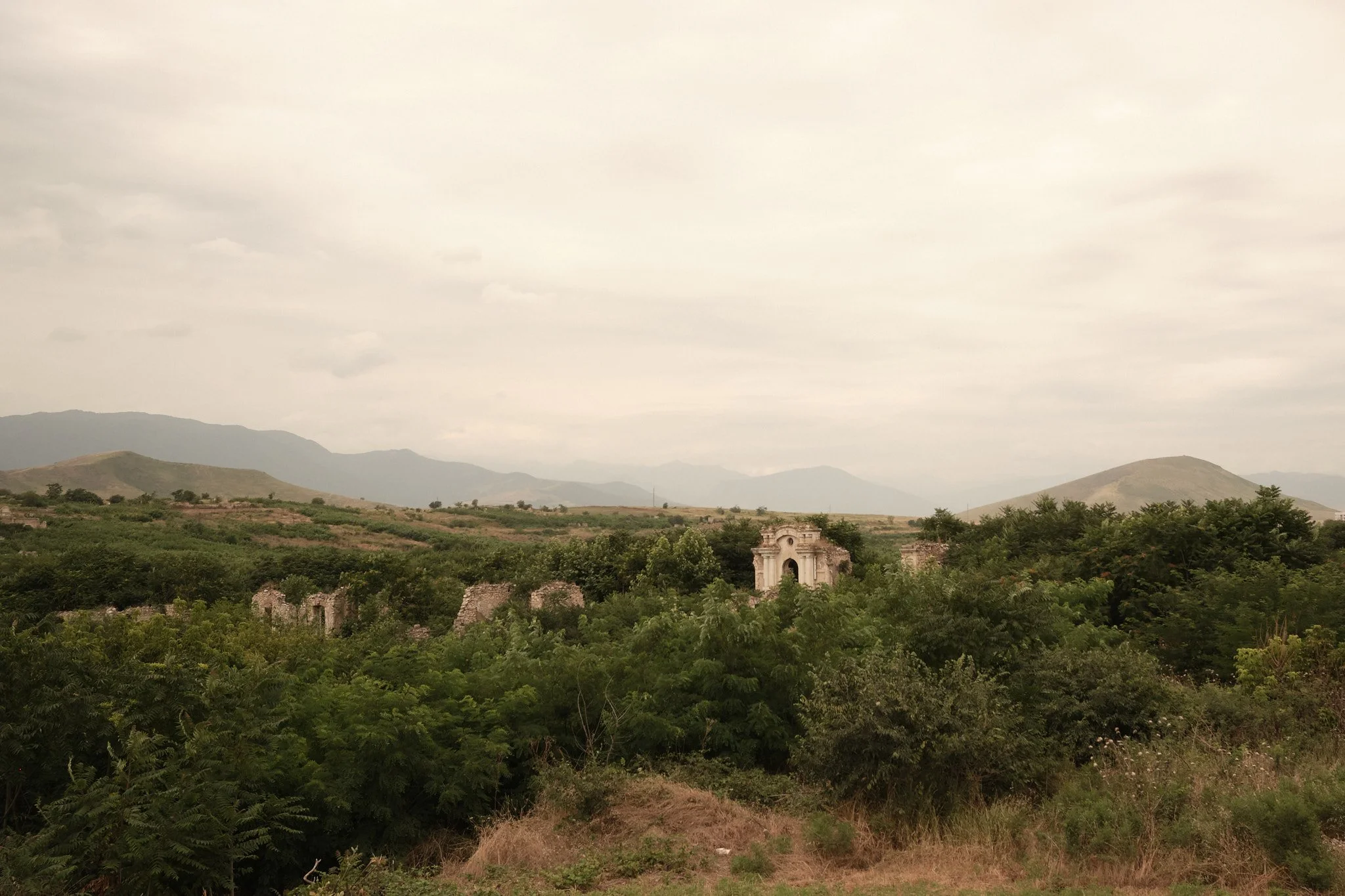
Once-opulent buildings stare back through the undergrowth; Nagorno-Karabakh, July 2026.

A shirt dries outside a damaged home as Muhammad's son watches from his makeshift rabbit hutch; Nagorno-Karabakh, in a village near Fuzuli, July 2026.
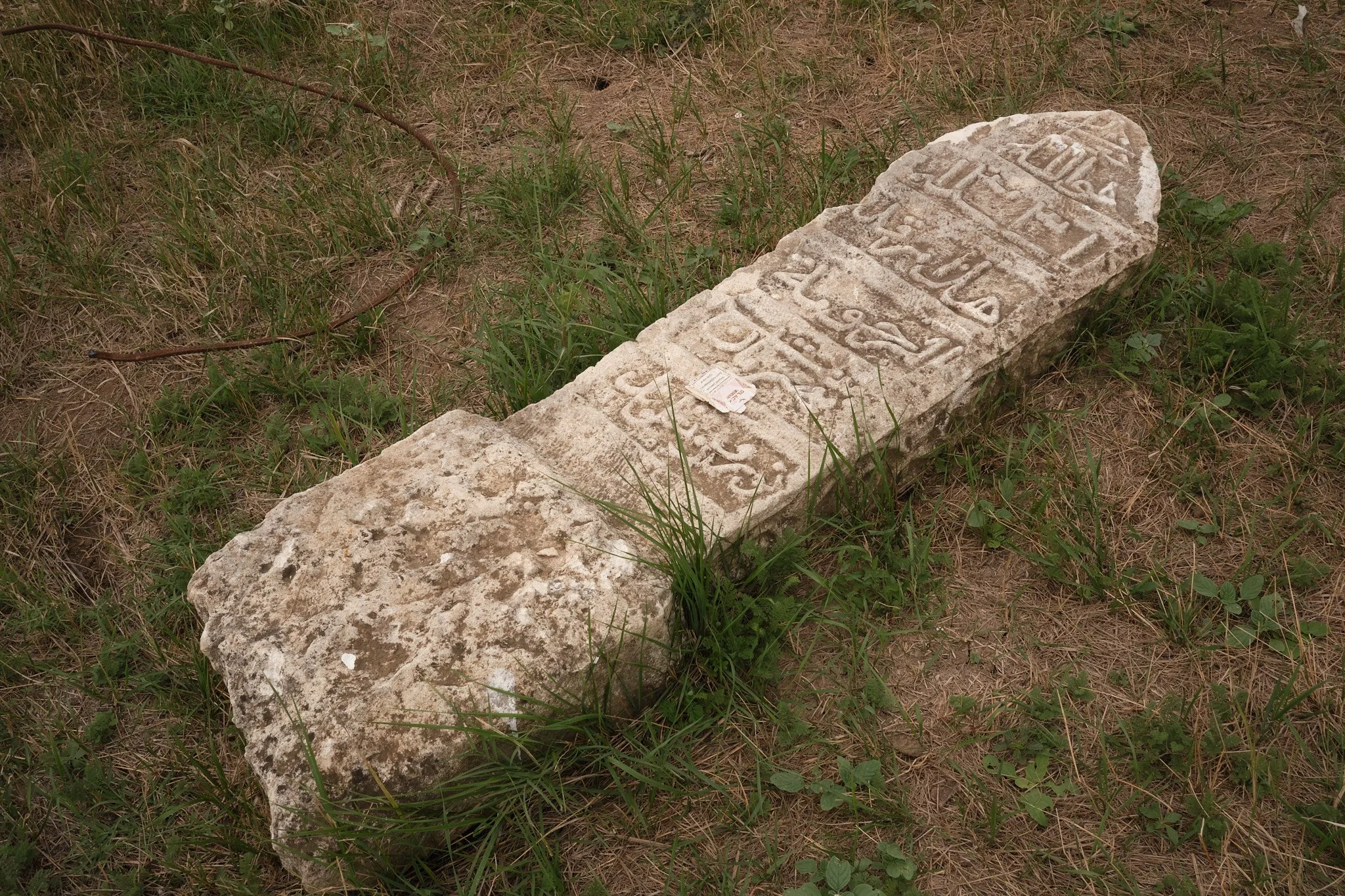
In a cemetery in Nagorno-Karabakh, a weathered headstone lies partly hidden in the grass with an empty cigarette box pressed onto it. Its inscription is carved in Arabic script, used here over centuries to write Persian, Arabic and Turkic. The stone hints at the region’s layered history; Nagorno-Karabakh, in a village near Fuzuli,, July 2026.

Muhammad's son, last child remaining in a destroyed village, proudly holds up his white pet rabbit; Nagorno-Karabakh, in a village near Fuzuli, July 2026.

An USA-branded football rests beside a stone well in a destroyed village near Fuzuli. A large, venomous snake sits behind, just out of sight. Now, only Muhammad's son lives in the village, making this football a rare glimpse of normality amid the rubble; Nagorno-Karabakh, in a village near Fuzuli, July 2026.
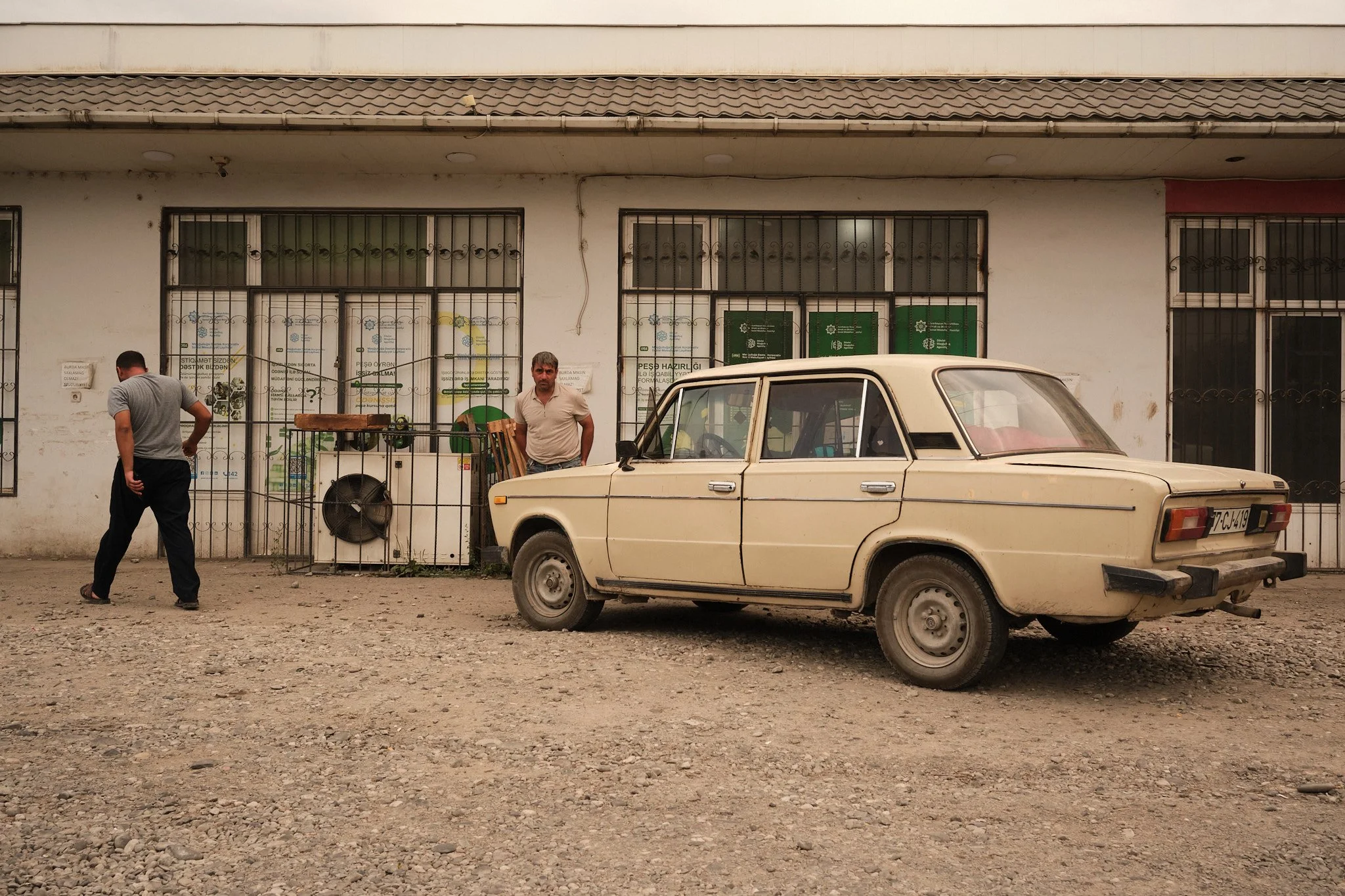
In Azerbaijan, each region has a licence plate area code. It is identifiable as the first two digits on a plate. In Fuzuli, Karabakh, this number is 19. To signify unwavering hope of return, and as a nod to others from their community, many of Azerbaijanis who were displaced keep 19 as their final two digits; Karabakh, July 2026.
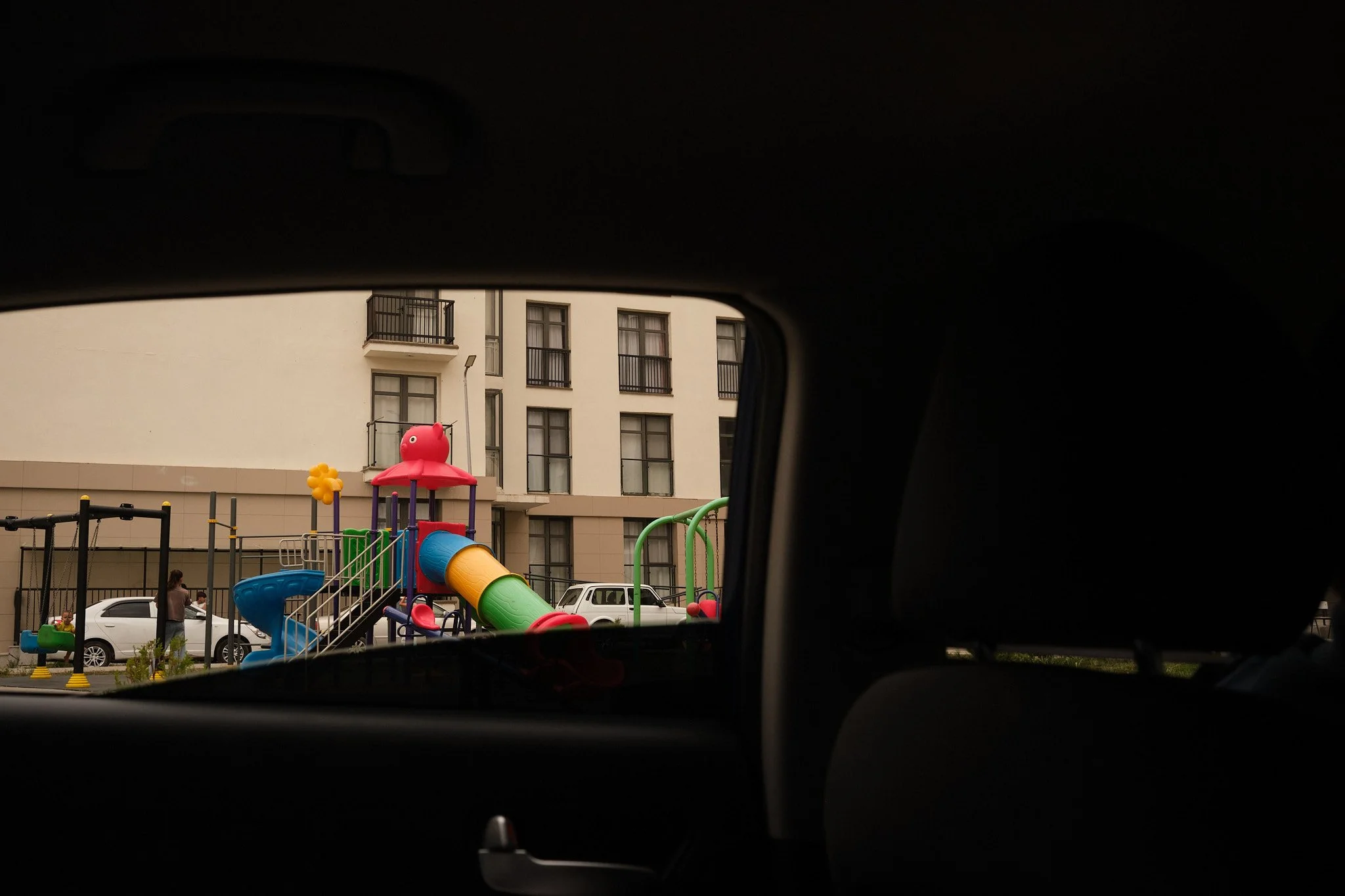
As displaced Azerbaijanis are encouraged to return, the government is building the bones of new communities; Nagorno-Karabakh, July 2026.
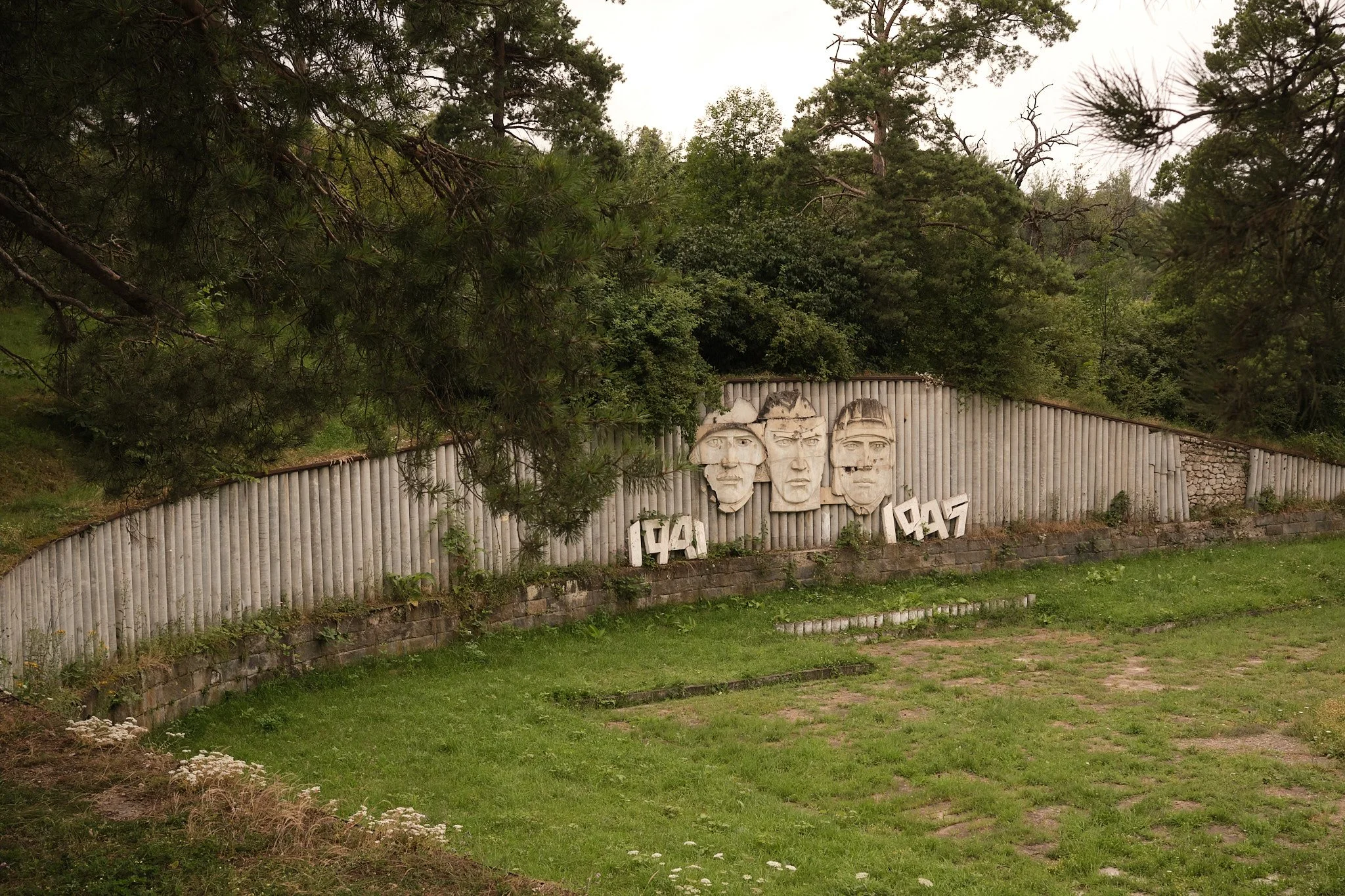
Second World War memorial from the years of the Soviet Union’s war against Nazi Germany, often called the Great Patriotic War. Bullet holes punctuate their faces - wounds which may have been inflicted in several different conflicts since; Shusha, Karabakh, July 2026.
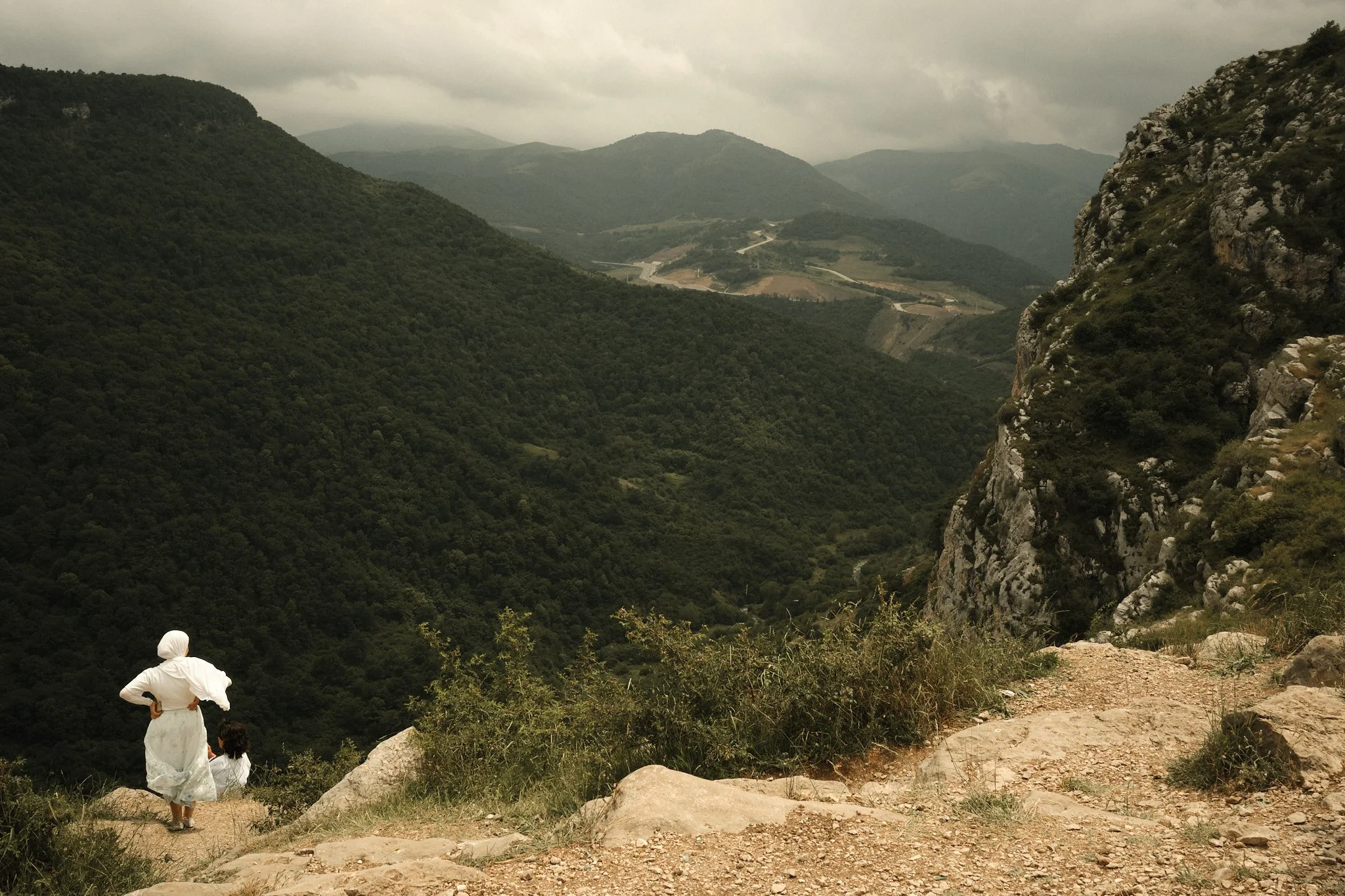
A woman looks out from the clifftop at Shusha. The phrase "next year in Shusha" is one known by many Azerbaijanis - a symbol of hope and perseverance that one day they will return to Karabakh. Perched above the valley, Shusha has long been seen as the key to Karabakh: whoever held it held the upper hand; Shusha, Karabakh, July 2026.